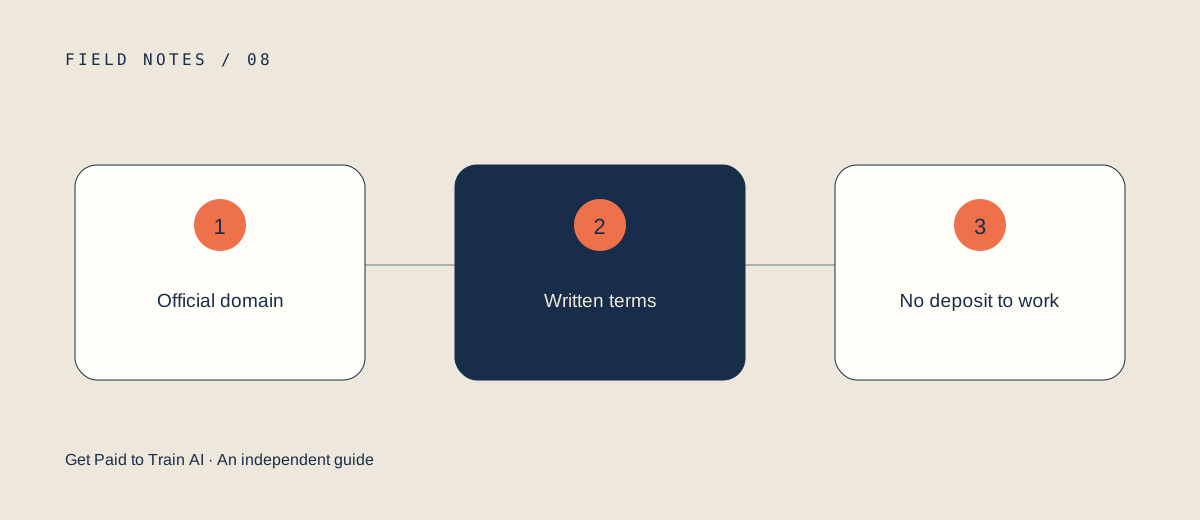
Recognize the deposit pattern
The Federal Trade Commission describes task scams that show growing earnings in an app and then demand a deposit, often cryptocurrency, to continue or cash out. A small initial payment can be used to build trust. The displayed balance is not proof that real earnings exist.
If work requires you to add your own money to release a balance, stop. Do not make a second payment to recover the first. The decision should be based on the payment demand, not how convincing the dashboard looks.
Check the route to the application
Open a fresh browser tab and navigate to the official company website yourself. Use its careers or contributor link. Compare the role and application destination with the message you received. Watch for misspellings, extra words, or a familiar brand name placed inside an unrelated domain.
Do not rely on a logo, a social profile, or a screenshot of an offer. If you cannot find the opportunity, contact the company through a support address or form reached from its own site. Avoid the contact details supplied solely by the questionable message.
Be cautious with generic recruiter texts
In an April 2026 warning, the FTC described fake recruiters using remote-work titles and asking recipients to reply “YES” or “INTERESTED.” Some schemes use fake checks; others lead into task deposits. Engaging with a message can be the first step even when it contains no link.
A real application can involve identity verification, but supply sensitive documents only through the verified process for a role you intentionally pursued. Do not send identity documents to an unverified social account.
Separate legitimate fees from a job promise
A course or résumé service is a separate purchase. It does not establish that an employer will accept you. Before paying for anything, ask what the seller actually provides, whether you need it, and whether you can use free materials instead.
Be especially skeptical of sellers offering approved accounts, assessment answers, a guaranteed pass, or guaranteed access to paid tasks. Even if the seller delivers something, it may be unusable or violate the platform’s rules.
If something has already gone wrong
Stop communicating with the suspected scammer and preserve relevant messages and transaction records. Contact the payment provider promptly about available recovery steps. If you exposed a password, change it on the genuine service and any other account where you reused it.
US readers can report suspected fraud at ReportFraud.ftc.gov. Use the company’s official support route to report impersonation. Then return to the platform selection guide and rebuild your shortlist from verified destinations.
Sources & review
Official sources reviewed November 8, 2026. Requirements and project availability can change; check the current application before acting.